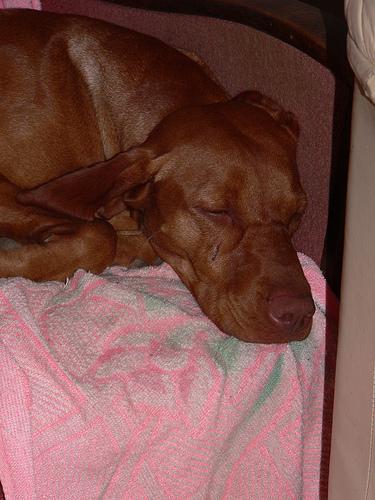
Vizsla
Rust-colored 'velcro dog' that must be near you — perfect for active households.
Traits at a glance
Cost calculator
Training tips for a Vizsla
Practical, breed-specific advice tuned to a Vizsla's temperament, energy and trainability.
House-Training Consistency
Use their velcro nature to your advantage—keep your Vizsla tethered to you indoors initially and interrupt accidents with a firm 'no' before immediately taking them outside to their spot, then praise calmly when they finish correctly.
Early Socialisation Essential
Expose your Vizsla to diverse people, dogs, and environments between 8-16 weeks to prevent their sensitivity from turning into nervousness; correct fearful or overexcited reactions with calm leash guidance while allowing confident, calm behaviour to continue unrestricted.
High-Intensity Exercise Daily
Provide at least 90 minutes of vigorous running, retrieving, or off-lead work daily, plus scent games and puzzle toys—under-exercised Vizslas become destructive and neurotic, making all training exponentially harder.
Managing Separation Anxiety
Prevent velcro-dog syndrome becoming pathological by teaching independence early: ignore whining or pawing for attention, reward settling at a distance, and gradually build alone-time tolerance using a crate with matter-of-fact departures and returns.
Calm, Firm Leadership
Match their sensitivity with clear, unemotional boundaries—use well-timed verbal corrections or leash pressure when they jump or demand attention, then immediately release pressure when they comply, building a respectful bond without harshness.
Training guides for a Vizsla
Expert-written guides picked for a Vizsla's temperament and needs.
How dogs actually learn: the four quadrants explained
Positive reinforcement, negative reinforcement, and everything in between — a clear, honest look at operant conditioning and when each tool is the right call.
Building a rock-solid recall
A reliable come-when-called can save your dog's life. Here's how to build one that holds up around real distractions.
Loose-lead walking: stop the pulling for good
Why your dog pulls, and a step-by-step plan using clear reinforcement to build a relaxed, no-tension walk.
Health & nutrition for a Vizsla
What to watch for, how to feed, and how to keep a Vizsla in top shape — tuned to this breed's size and build.
Common health concerns
- •Vizslas are prone to hip dysplasia and elbow dysplasia, so monitor for lameness, stiffness after rest, or reluctance to jump or climb stairs.
- •This breed has an increased risk of epilepsy and idiopathic seizures, typically appearing between 6 months and 3 years of age.
- •Hypothyroidism is common in Vizslas, presenting as unexplained weight gain, lethargy, skin issues, or coat thinning despite adequate nutrition.
- •Bloat (gastric dilatation-volvulus) is a life-threatening risk in deep-chested Vizslas; watch for distended abdomen, restlessness, unproductive retching, and seek emergency care immediately.
Feeding & nutrition
- •Feed a raw biologically-appropriate diet with 70% raw muscle meat (kangaroo, beef, chicken), 10% edible bone (chicken necks, wings, lamb ribs), 10% organ meat (liver, kidney), and 10% vegetables to support this athletic breed's high energy demands and joint health.
- •Vizslas thrive on approximately 600-900 calories daily (roughly 1.5-2% of body weight in raw food), split into two meals to reduce bloat risk and sustain energy for their extreme activity levels.
- •Raw meaty bones provide natural dental care and mental stimulation essential for this intelligent, active breed, while species-appropriate nutrition supports lean muscle mass and prevents inflammatory conditions linked to processed foods.
- •If raw feeding is temporarily impractical, choose a high-protein, grain-free kibble as a fallback, but recognize it lacks the bioavailable nutrients, enzymes, and moisture that raw food provides for optimal Vizsla health.
Exercise & weight
- •Vizslas require 1-2 hours of vigorous daily exercise including running, hiking, or retrieving games to satisfy their extreme sporting dog energy and prevent destructive behaviour.
- •Incorporate swimming and off-leash running in safe areas to provide low-impact cardiovascular conditioning that protects joints while meeting their intense physical needs.
- •Mental stimulation through scent work, agility training, or interactive puzzle toys is essential alongside physical exercise to prevent anxiety and boredom in this highly intelligent breed.
- •Maintain consistent daily exercise throughout their lifespan to prevent obesity (which exacerbates hip dysplasia) and to support their need for constant human companionship during activities.
Educational guidance only — not veterinary advice. Always consult a licensed vet for your dog's specific health needs.
Ready to meet a Vizsla?
Search animal shelters and rescues across Australia — and consider bringing a certified trainer to your first meet-and-greet.