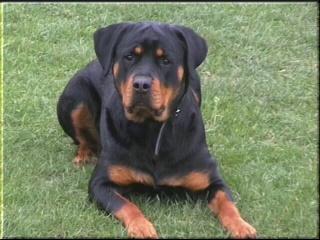
Rottweiler
Powerful guardian for experienced owners who commit to socialization.
Traits at a glance
Cost calculator
Training tips for a Rottweiler
Practical, breed-specific advice tuned to a Rottweiler's temperament, energy and trainability.
House-Training Consistency
Establish a strict schedule and supervise closely indoors; use a firm verbal marker the instant you catch inappropriate elimination, then immediately escort outside to the correct spot. Rottweilers respond well to clear structure and will reliably alert you once the routine is established.
Early Broad Socialisation
Expose your Rottweiler to diverse people, dogs, and environments during the critical 8-16 week window, rewarding calm behaviour and calmly interrupting any guarding or overly suspicious reactions. Their guardian instinct develops quickly, so early neutrality to strangers is non-negotiable.
Physical and Mental Work
Provide daily structured walks with loose-lead expectations plus problem-solving tasks like scent work or carting to satisfy their working drive. A bored Rottweiler will create their own job, usually one you won't appreciate.
Managing Dominance Testing
Watch for adolescent boundary-pushing around 12-18 months; respond immediately with calm, non-negotiable corrections to unwanted behaviours like door-barging or ignoring known commands. Rottweilers respect fair, consistent leadership and will challenge unclear authority.
Confident Handler Approach
Train with calm assertiveness using clear markers for both correct and incorrect choices, as this breed reads hesitation as weakness. Match their confident temperament with decisive timing and they'll be a devoted, reliable companion.
Training guides for a Rottweiler
Expert-written guides picked for a Rottweiler's temperament and needs.
How dogs actually learn: the four quadrants explained
Positive reinforcement, negative reinforcement, and everything in between — a clear, honest look at operant conditioning and when each tool is the right call.
Building a rock-solid recall
A reliable come-when-called can save your dog's life. Here's how to build one that holds up around real distractions.
Loose-lead walking: stop the pulling for good
Why your dog pulls, and a step-by-step plan using clear reinforcement to build a relaxed, no-tension walk.
Health & nutrition for a Rottweiler
What to watch for, how to feed, and how to keep a Rottweiler in top shape — tuned to this breed's size and build.
Common health concerns
- •Rottweilers are genetically predisposed to hip and elbow dysplasia, so monitor for limping, difficulty rising, or reluctance to climb stairs, especially as they mature.
- •This breed has elevated risk of osteosarcoma (bone cancer) and other cancers, warranting immediate veterinary attention for any unexplained lumps, swelling, or persistent lameness.
- •Dilated cardiomyopathy (heart disease) occurs in Rottweilers, so watch for exercise intolerance, coughing, or laboured breathing and ensure regular cardiac screening.
- •Bloat (gastric dilatation-volvulus) is a life-threatening emergency in deep-chested Rottweilers; feed smaller meals throughout the day and avoid vigorous exercise immediately after eating.
Feeding & nutrition
- •Feed a biologically-appropriate raw diet with 2-3% of body weight daily (roughly 1.6-2.7 kg for an 80-135 lb Rottweiler), emphasizing raw muscle meat (beef, lamb, kangaroo), raw meaty bones (chicken frames, lamb necks), and 10-15% organ meat (liver, kidney) to support joint health and immune function.
- •Include oily fish like sardines twice weekly and green-lipped mussels for natural omega-3s and glucosamine to protect joints prone to dysplasia in this heavy breed.
- •Divide raw meals into two or three smaller feedings to reduce bloat risk, and ensure appropriate calcium-phosphorus balance through meaty bones rather than supplementation for optimal skeletal development.
- •If raw feeding isn't immediately feasible, choose a high-quality, grain-free kibble as a temporary measure, but transition to raw as soon as possible for superior joint support, weight management, and overall vitality in this powerful working breed.
Exercise & weight
- •Provide 60-90 minutes of daily exercise split into multiple sessions, including structured walks, off-lead running in secure areas, and mentally stimulating activities like tracking or protection training suited to their working heritage.
- •Avoid high-impact jumping or repetitive stair climbing until 18-24 months old to protect developing joints vulnerable to dysplasia, focusing instead on controlled leash walks and swimming.
- •Incorporate obedience training and guardian-appropriate work into exercise routines to satisfy their intelligent, protective temperament and prevent boredom-related destructive behaviour.
- •Monitor body condition closely to prevent obesity, as excess weight dramatically increases stress on hips and elbows already prone to dysplasia, adjusting raw food portions as activity levels change.
Educational guidance only — not veterinary advice. Always consult a licensed vet for your dog's specific health needs.
Ready to meet a Rottweiler?
Search animal shelters and rescues across Australia — and consider bringing a certified trainer to your first meet-and-greet.