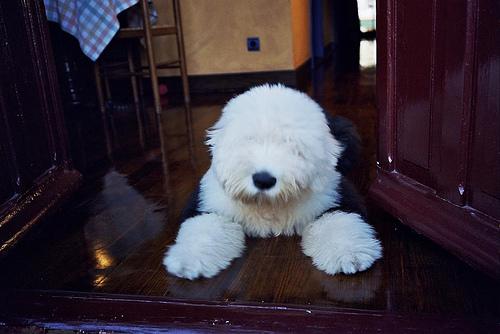
Old English Sheepdog
Living shaggy carpet — playful family dog with a coat that eats hours of grooming.
Traits at a glance
Cost calculator
Training tips for a Old English Sheepdog
Practical, breed-specific advice tuned to a Old English Sheepdog's temperament, energy and trainability.
House-Training Consistency
Take your Old English Sheepdog pup outside immediately after meals and naps, and calmly interrupt any indoor accidents with a firm 'no' before redirecting outside. Praise enthusiastically when they toilet in the correct spot to build the association quickly.
Early Socialisation Focus
Expose your sheepdog to varied environments, children, and other animals between 8-16 weeks to prevent wariness, as their herding instinct can make them overly protective if under-socialised. Use controlled introductions and reward calm, confident behaviour around new experiences.
Moderate Exercise Needs
Provide daily walks and interactive play sessions rather than intense runs, and incorporate puzzle feeders or scent work to satisfy their smart, working-dog mind without over-exerting this moderate-energy breed. Mental challenges prevent boredom-driven mischief effectively.
Curb Herding Behaviours
Watch for nipping at heels or circling family members, especially children—interrupt this instinct immediately with a sharp verbal marker and redirect to an appropriate toy or task. Consistent boundaries teach them that herding humans is off-limits while channeling their drive constructively.
Patient, Clear Communication
Use calm, consistent cues and well-timed corrections when your sheepdog tests boundaries, as their adaptable but occasionally stubborn nature responds best to fair leadership. Keep sessions short and clear, building on their intelligence without overwhelming their moderate trainability.
Training guides for a Old English Sheepdog
Expert-written guides picked for a Old English Sheepdog's temperament and needs.
How dogs actually learn: the four quadrants explained
Positive reinforcement, negative reinforcement, and everything in between — a clear, honest look at operant conditioning and when each tool is the right call.
Separation anxiety: a realistic rehab plan
Barking, destruction and toileting when you leave? Here's how to tell true separation anxiety from boredom — and how to actually fix it.
Health & nutrition for a Old English Sheepdog
What to watch for, how to feed, and how to keep a Old English Sheepdog in top shape — tuned to this breed's size and build.
Common health concerns
- •Old English Sheepdogs are genetically prone to hip dysplasia and elbow dysplasia, so watch for limping, difficulty rising, or reluctance to jump and climb stairs.
- •This breed has increased risk of progressive retinal atrophy and cataracts, requiring regular veterinary eye examinations to catch early vision deterioration.
- •Bloat (gastric dilatation-volvulus) is a life-threatening emergency in deep-chested large breeds like this one; watch for restlessness, distended abdomen, and unproductive retching.
- •Hypothyroidism occurs commonly in Old English Sheepdogs, presenting as unexplained weight gain, lethargy, skin problems, and coat changes despite proper raw nutrition.
Feeding & nutrition
- •Feed a biologically-appropriate raw diet of 2-3% of body weight daily (1.2-3 lbs for a 60-100 lb dog), consisting of 70-80% raw muscle meat, 10% edible bone (chicken frames, lamb necks), 5-10% organ meat (liver, kidney), and 5-10% vegetables.
- •Raw meaty bones like beef brisket bones, lamb ribs, or kangaroo tails are essential for this large breed's dental health and jaw exercise, supporting joint health and preventing the inflammation linked to hip dysplasia.
- •Split raw meals into two daily feedings (morning and evening) to reduce bloat risk in this deep-chested breed, and avoid exercise one hour before and after feeding.
- •If raw feeding isn't possible due to convenience constraints, choose a high-quality grain-free kibble as a secondary option, but understand it lacks the bioavailable enzymes, natural moisture, and joint-supporting nutrients of raw food.
Exercise & weight
- •Provide 60-90 minutes of daily exercise split into two sessions, including moderate walks, herding games, and mental stimulation to satisfy this intelligent working breed without overstraining developing joints.
- •Avoid high-impact activities like jumping or stair climbing until 18 months old to protect growing hips and elbows from dysplasia progression in this large breed.
- •Include low-impact activities like swimming and puzzle-solving games that engage the Old English Sheepdog's herding instincts while maintaining ideal weight to reduce joint stress.
- •Monitor weight closely through exercise and raw feeding, as obesity dramatically worsens hip dysplasia and joint problems in large breeds predisposed to skeletal issues.
Educational guidance only — not veterinary advice. Always consult a licensed vet for your dog's specific health needs.
Ready to meet a Old English Sheepdog?
Search animal shelters and rescues across Australia — and consider bringing a certified trainer to your first meet-and-greet.