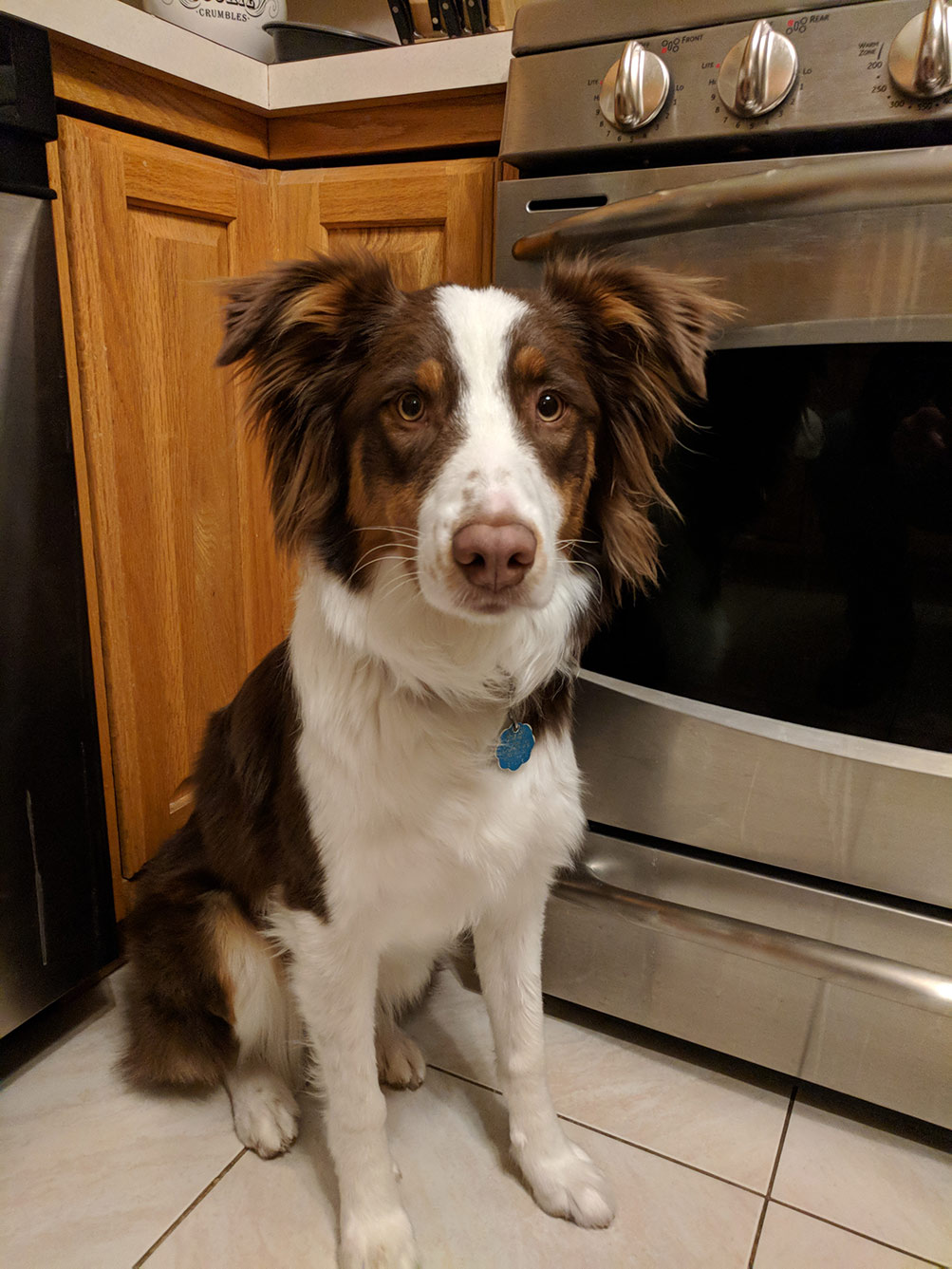
Miniature American Shepherd
Formerly known as Mini Aussie. Compact herding dog with all the drive of a full-size Australian Shepherd. Needs a job.
Traits at a glance
Cost calculator
Training tips for a Miniature American Shepherd
Practical, breed-specific advice tuned to a Miniature American Shepherd's temperament, energy and trainability.
House-Training Consistency
Use a tight schedule with crate confinement between supervised outings, and immediately interrupt any indoor accidents with a firm verbal marker before quickly moving the pup outside to finish. Their intelligence means they'll learn the pattern within days if you're consistent.
Early Socialisation Priority
Expose your Mini American to a wide variety of people, dogs, and environments before 16 weeks, as their herding instinct can make them wary or reactive if under-socialised. Pair new experiences with play and calm praise, but don't coddle fear—encourage confident exploration instead.
Exercise and Mental Work
Provide at least 60 minutes of structured activity daily including obedience drills, trick training, or herding-style games like fetch with directional cues. A tired mind prevents nuisance barking and destructive chewing far better than physical exercise alone.
Managing Heel-Nipping Behaviour
Redirect any nipping or chasing of children or other pets immediately with a firm 'no' and withdrawal of attention, then channel that herding drive into appropriate outlets like treibball or agility. Never allow rehearsal of the behaviour, as it will intensify quickly.
Clear Leadership Training
This breed thrives on structure and clear communication, so establish non-negotiable rules from day one and use well-timed verbal corrections paired with guidance to shape behaviour. Their eagerness to work means they'll happily comply once they understand you're a fair, consistent leader.
Training guides for a Miniature American Shepherd
Expert-written guides picked for a Miniature American Shepherd's temperament and needs.
How dogs actually learn: the four quadrants explained
Positive reinforcement, negative reinforcement, and everything in between — a clear, honest look at operant conditioning and when each tool is the right call.
Building a rock-solid recall
A reliable come-when-called can save your dog's life. Here's how to build one that holds up around real distractions.
Loose-lead walking: stop the pulling for good
Why your dog pulls, and a step-by-step plan using clear reinforcement to build a relaxed, no-tension walk.
Health & nutrition for a Miniature American Shepherd
What to watch for, how to feed, and how to keep a Miniature American Shepherd in top shape — tuned to this breed's size and build.
Common health concerns
- •Miniature American Shepherds are genetically prone to hip dysplasia and elbow dysplasia, so watch for limping, stiffness, or reluctance to jump and maintain a lean body condition to reduce joint stress.
- •This breed has increased risk for progressive retinal atrophy (PRA) and collie eye anomaly, requiring regular veterinary eye examinations to monitor vision health.
- •Multi-drug sensitivity (MDR1 gene mutation) is common in herding breeds including Mini American Shepherds, making certain medications dangerous—always inform your vet of this breed-specific risk.
- •Epilepsy occurs at higher rates in this breed, so monitor for seizures, tremors, or unusual neurological episodes and seek veterinary assessment if observed.
Feeding & nutrition
- •Feed a biologically-appropriate raw food (BARF) diet as the foundation: 2-3% of body weight daily (approximately 0.4-1.2 lbs for a 20-40 lb dog), divided into raw muscle meat (70-80%), raw meaty bones like chicken necks or wings (10-15%), and organ meat including liver (5-10%).
- •Raw feeding supports this high-energy herding breed's joint health, lean muscle mass, and digestive function far better than processed kibble, with natural enzymes and nutrients in their most bioavailable form.
- •Portion raw meals to maintain a lean, athletic body condition with visible waist and palpable ribs, as excess weight significantly increases risk of hip and elbow dysplasia in this breed.
- •If convenience absolutely requires it, choose a high-protein, grain-free kibble as a fallback, but understand it lacks the living enzymes, moisture, and species-appropriate nutrition that raw food provides for optimal canine health.
Exercise & weight
- •Provide 60-90 minutes of vigorous daily exercise including running, hiking, or fetch to satisfy this breed's high herding drive and prevent destructive behaviours from boredom.
- •Incorporate mental stimulation through obedience training, agility courses, herding trials, or puzzle toys daily, as this intelligent breed genuinely needs a job to stay psychologically healthy.
- •Include varied terrain and activities to build strong joints and muscles while maintaining ideal weight, which is critical for preventing hip and elbow dysplasia progression.
- •Avoid repetitive high-impact jumping on hard surfaces during growth (under 18 months) to protect developing joints, but maintain consistent moderate exercise throughout their life.
Educational guidance only — not veterinary advice. Always consult a licensed vet for your dog's specific health needs.
Ready to meet a Miniature American Shepherd?
Search animal shelters and rescues across Australia — and consider bringing a certified trainer to your first meet-and-greet.