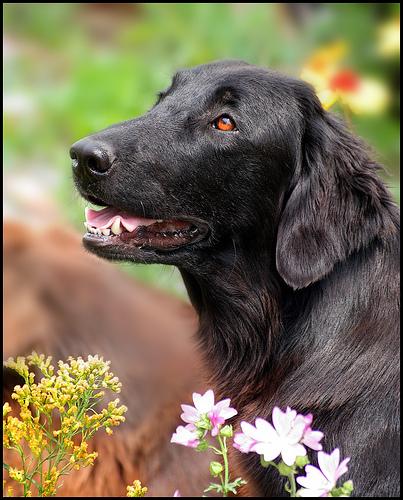
Flat-Coated Retriever
Forever-puppy retriever. Slower to mature than Labs. Shorter lifespan than most retrievers due to cancer risk — buy from health-tested parents.
Traits at a glance
Cost calculator
Training tips for a Flat-Coated Retriever
Practical, breed-specific advice tuned to a Flat-Coated Retriever's temperament, energy and trainability.
House-Training Consistency
Establish a strict schedule with frequent outdoor trips, especially after meals and play. If you catch an accident in progress, use a firm verbal interrupter and immediately take them outside to finish, then calmly praise completion in the correct spot.
Early Socialisation
Expose your Flattie to diverse people, dogs, and environments during their extended puppyhood (up to 3-4 years). Their exuberant friendliness needs boundaries—teach calm greetings by withholding attention when they jump and only greeting when four paws are on the ground.
Exercise and Enrichment
Provide at least 60-90 minutes of vigorous daily exercise including retrieval games and swimming, paired with scent work or food puzzles. Their high energy and playful nature mean under-stimulation leads directly to destructive behaviour and hyperactivity indoors.
Managing Prolonged Immaturity
Expect puppy-like mouthing, jumping, and impulsivity well into adulthood—don't wait for them to 'grow out of it'. Use well-timed corrections (leash pressure, verbal markers) paired with redirection to teach incompatible behaviours like 'sit' or holding a toy instead.
Cheerful but Clear
Match their optimistic temperament with upbeat training sessions, but establish clear, consistent boundaries using whatever consequence stops unwanted behaviour. Their eagerness to please responds well to structure—they need to understand both what earns your approval and what doesn't.
Training guides for a Flat-Coated Retriever
Expert-written guides picked for a Flat-Coated Retriever's temperament and needs.
How dogs actually learn: the four quadrants explained
Positive reinforcement, negative reinforcement, and everything in between — a clear, honest look at operant conditioning and when each tool is the right call.
Building a rock-solid recall
A reliable come-when-called can save your dog's life. Here's how to build one that holds up around real distractions.
Loose-lead walking: stop the pulling for good
Why your dog pulls, and a step-by-step plan using clear reinforcement to build a relaxed, no-tension walk.
Health & nutrition for a Flat-Coated Retriever
What to watch for, how to feed, and how to keep a Flat-Coated Retriever in top shape — tuned to this breed's size and build.
Common health concerns
- •Flat-Coated Retrievers have a significantly elevated risk of cancer (particularly hemangiosarcoma and lymphoma), making this the primary health concern for the breed with typically shorter lifespans of 8-10 years.
- •Hip dysplasia and luxating patellas occur in the breed, so monitor for limping, difficulty rising, or reluctance to jump, especially as they age.
- •Bloat (gastric dilatation-volvulus) is a risk in this deep-chested breed, so watch for distended abdomen, restlessness, or unproductive retching requiring immediate veterinary attention.
- •Their slower maturation and exuberant nature can lead to joint stress in puppies, so avoid over-exercising young dogs before growth plates close around 18 months.
Feeding & nutrition
- •Feed a raw BARF diet of 2-3% of body weight daily (approximately 1.2-2.1 lbs for a 60-70 lb Flat-Coat), with 70-80% raw muscle meat, 10% edible raw meaty bones (chicken frames, turkey necks), 5% liver, and 5% other secreting organs to support immune function and potentially reduce cancer risk.
- •Include oily fish like sardines or salmon 2-3 times weekly for anti-inflammatory omega-3s, plus raw green tripe and fresh vegetables to provide natural antioxidants and phytonutrients critical for this cancer-prone breed.
- •Split meals into two feedings and avoid exercise one hour before and after meals to minimize bloat risk in this deep-chested retriever.
- •If raw feeding isn't feasible, choose a high-quality, grain-free kibble at approximately 3-4 cups daily (1,600-1,800 calories), though this lacks the enzymatic and nutritional benefits of species-appropriate raw food.
Exercise & weight
- •Provide 60-90 minutes of vigorous daily exercise including swimming, retrieving games, and off-lead running to satisfy this high-energy sporting breed's needs and maintain healthy weight.
- •Incorporate mental stimulation through scent work, obedience training, or puzzle toys, as Flat-Coats retain puppy-like playfulness and require mental engagement well into adulthood.
- •Limit high-impact jumping and repetitive exercise in dogs under 18 months to protect developing joints, focusing instead on swimming and controlled leash walks during growth phases.
- •Maintain consistent exercise throughout their life to prevent obesity, which exacerbates joint issues and may increase cancer risk in this already vulnerable breed.
Educational guidance only — not veterinary advice. Always consult a licensed vet for your dog's specific health needs.
Ready to meet a Flat-Coated Retriever?
Search animal shelters and rescues across Australia — and consider bringing a certified trainer to your first meet-and-greet.