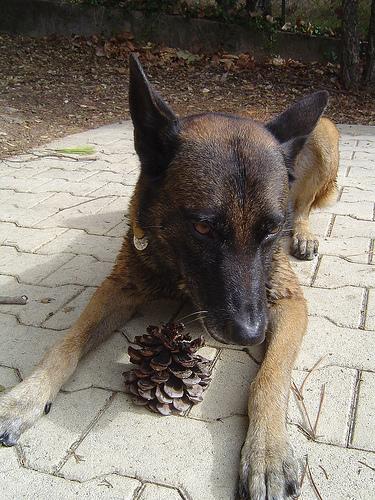
Belgian Malinois
Police/military dog of choice — genius-level worker that will destroy your house without a job.
Traits at a glance
Cost calculator
Training tips for a Belgian Malinois
Practical, breed-specific advice tuned to a Belgian Malinois's temperament, energy and trainability.
House-Training Essentials
Establish a rigid schedule with immediate outdoor access after meals and crate rest, and use a firm verbal marker the instant elimination occurs indoors to interrupt, then redirect outside. Their intelligence means they'll grasp the routine within days if you're consistent.
Early Socialisation Priority
Expose your Malinois to diverse people, dogs, and environments before 16 weeks, but correct any overarousal or guarding behaviour immediately with leash pressure and calm repositioning—their protective instincts develop fast. Controlled, structured interactions prevent later aggression issues.
Exercise and Jobs
Provide minimum two hours daily of high-intensity work like tracking, protection sports, or advanced obedience drills—simple walks won't cut it. Without genuine tasks that challenge their brain and body, expect destructive behaviour and neurotic tendencies.
Managing Herding Nipping
When your Malinois nips at heels or hands (especially with children), immediately cease all movement, use a sharp verbal correction, and enforce a brief time-out to break the behaviour cycle. Redirect that drive into appropriate bite work or tug games on your terms only.
Firm Leadership Approach
Train with clear communication, immediate consequences for both correct and incorrect responses, and absolute consistency—this breed will exploit any handler ambiguity. They respect confident direction and need a handler who can match their intensity without emotion.
Training guides for a Belgian Malinois
Expert-written guides picked for a Belgian Malinois's temperament and needs.
How dogs actually learn: the four quadrants explained
Positive reinforcement, negative reinforcement, and everything in between — a clear, honest look at operant conditioning and when each tool is the right call.
Building a rock-solid recall
A reliable come-when-called can save your dog's life. Here's how to build one that holds up around real distractions.
Loose-lead walking: stop the pulling for good
Why your dog pulls, and a step-by-step plan using clear reinforcement to build a relaxed, no-tension walk.
Health & nutrition for a Belgian Malinois
What to watch for, how to feed, and how to keep a Belgian Malinois in top shape — tuned to this breed's size and build.
Common health concerns
- •Belgian Malinois are genetically prone to hip and elbow dysplasia, so monitor for limping, difficulty rising, or reluctance to jump, especially as they mature.
- •Progressive retinal atrophy (PRA) can occur in this breed, so watch for night blindness or bumping into objects in dim light and schedule regular eye exams.
- •This breed may develop epilepsy, so be alert for seizures or unusual neurological episodes and consult your vet immediately if observed.
- •Bloat (gastric dilatation-volvulus) is a risk in deep-chested Malinois, so feed smaller meals throughout the day and avoid vigorous exercise immediately after eating.
Feeding & nutrition
- •Feed a biologically-appropriate raw food (BARF) diet with 2-3% of body weight daily (1.6-2.4 lbs for a 60 lb Malinois), consisting of 70-80% raw muscle meat, 10% raw meaty bones (chicken necks, lamb ribs), and 5-10% organ meat (liver, kidney) to fuel this high-performance breed.
- •Raw feeding supports joint health with natural glucosamine from cartilage and bones, critical for preventing dysplasia in this athletic working breed.
- •Include omega-3-rich raw fish or green-lipped mussel once weekly to reduce inflammation and support the Malinois' intense physical demands and cognitive function.
- •If raw feeding isn't feasible, choose a high-protein, grain-free kibble (minimum 30% protein) formulated for active large breeds, but recognize this is a nutritionally inferior alternative to fresh raw food.
Exercise & weight
- •Belgian Malinois require a minimum of 2-3 hours of intense physical exercise daily, including running, agility work, or bite training to prevent destructive behaviour from boredom.
- •Provide structured mental work such as scent detection, obedience drills, or puzzle tasks daily, as this genius-level breed needs mental stimulation as much as physical output.
- •Engage in high-impact activities like fetch, flirt pole, or treadmill work to maintain lean muscle mass and prevent obesity, which exacerbates joint issues.
- •Avoid repetitive high-impact jumping on hard surfaces before 18 months of age to protect developing hips and elbows from dysplasia.
Educational guidance only — not veterinary advice. Always consult a licensed vet for your dog's specific health needs.
Ready to meet a Belgian Malinois?
Search animal shelters and rescues across Australia — and consider bringing a certified trainer to your first meet-and-greet.