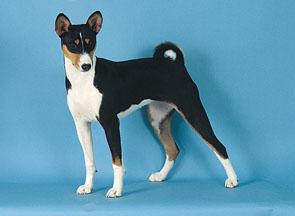
Basenji
The barkless dog — yodels instead. Cat-like grooming habits, minimal shedding. Independent, tricky to train. High prey drive.
Traits at a glance
Cost calculator
Training tips for a Basenji
Practical, breed-specific advice tuned to a Basenji's temperament, energy and trainability.
House-Training Consistency
Establish a rigid toilet schedule and supervise closely indoors; use a firm verbal marker and immediate removal of freedom when accidents occur, as Basenjis are cat-like and won't respond well to delayed consequences.
Early Socialisation Priority
Expose your Basenji to diverse people, dogs, and environments before 16 weeks to counter their reserved nature, but don't force interactions—let them observe and approach at their own pace to build confidence.
Exercise and Enrichment
Provide daily vigorous running in secure areas and puzzle feeders to satisfy their high energy and curiosity; a bored Basenji will become destructive and nearly impossible to redirect.
Managing Prey Drive
Never trust off-leash in unfenced areas due to intense chase instinct; use a long line for training recalls and interrupt fixation on small animals with a quick leash pop or sound distraction before they bolt.
Effective Training Approach
Keep sessions short and engaging with food or toy motivation, but establish clear boundaries with immediate, fair corrections for unwanted behaviour—Basenjis respect consistency and clear communication over repetition alone.
Training guides for a Basenji
Expert-written guides picked for a Basenji's temperament and needs.
How dogs actually learn: the four quadrants explained
Positive reinforcement, negative reinforcement, and everything in between — a clear, honest look at operant conditioning and when each tool is the right call.
Building a rock-solid recall
A reliable come-when-called can save your dog's life. Here's how to build one that holds up around real distractions.
Loose-lead walking: stop the pulling for good
Why your dog pulls, and a step-by-step plan using clear reinforcement to build a relaxed, no-tension walk.
Health & nutrition for a Basenji
What to watch for, how to feed, and how to keep a Basenji in top shape — tuned to this breed's size and build.
Common health concerns
- •Basenjis are genetically prone to Fanconi syndrome, a kidney disorder affecting nutrient absorption, so monitor for excessive thirst, urination, and weight loss.
- •Progressive retinal atrophy (PRA) can lead to blindness in this breed, so watch for night blindness or reluctance to navigate in dim light.
- •Hip dysplasia and patellar luxation occur in Basenjis, causing lameness or abnormal gait that worsens with exercise.
- •This breed can develop hypothyroidism, presenting as unexplained weight gain, lethargy, and coat quality decline despite adequate nutrition.
Feeding & nutrition
- •Feed your Basenji a biologically-appropriate raw diet of 2-3% of body weight daily (roughly 450-700g for a 22-24 lb dog), with 70-80% raw muscle meat, 10% edible bone, and 10% organ meat (half being liver).
- •Raw chicken frames, lamb necks, or rabbit provide appropriate meaty bones for dental health and natural chewing satisfaction for this small, athletic breed.
- •Include kidney-supporting ingredients like green tripe and oily fish given their predisposition to Fanconi syndrome, while avoiding high-carbohydrate fillers that stress renal function.
- •If raw feeding isn't immediately feasible, choose a high-protein, grain-free kibble as a temporary measure, feeding approximately 1-1.25 cups daily split into two meals, but transition to raw as soon as possible for optimal health.
Exercise & weight
- •Provide at least 60-90 minutes of vigorous daily exercise including brisk walks, free running in secure areas, and activities that engage their strong prey drive.
- •Basenjis require mentally stimulating activities like scent work or puzzle games to prevent boredom-driven destructive behaviour due to their intelligent, curious nature.
- •Always exercise in securely fenced areas or on-leash, as their extreme prey drive makes recall unreliable and they will chase small animals relentlessly.
- •Include regular sprinting opportunities and agility-style movement to maintain lean muscle mass and prevent obesity, which exacerbates their hip and joint vulnerabilities.
Educational guidance only — not veterinary advice. Always consult a licensed vet for your dog's specific health needs.
Ready to meet a Basenji?
Search animal shelters and rescues across Australia — and consider bringing a certified trainer to your first meet-and-greet.