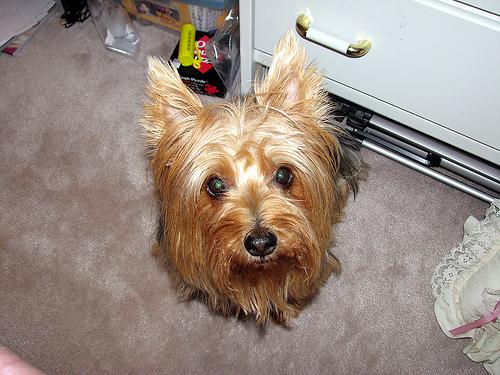
Australian Terrier
Australia's own homegrown terrier. Tough, adaptable, low-shed. Great little watchdog. Historically bred to hunt snakes and rats.
Traits at a glance
Cost calculator
Training tips for a Australian Terrier
Practical, breed-specific advice tuned to a Australian Terrier's temperament, energy and trainability.
House-Training Strategy
Establish a strict routine with frequent outdoor trips after meals and sleep, and use a firm verbal marker like 'No' if you catch them mid-accident, then immediately redirect outside. Their clever nature means they'll learn the pattern quickly if you're consistent.
Early Socialisation Focus
Expose your Australian Terrier to various people, dogs, and environments before 16 weeks, using controlled interactions to prevent their natural alertness from developing into territorial aggression. Their watchdog instinct needs guidance to distinguish real threats from everyday activity.
Exercise and Enrichment
Provide daily 30-40 minute walks plus scent games or puzzle toys to satisfy both their physical energy and sharp hunting instincts. A bored Aussie Terrier will invent their own job, usually involving digging or chasing.
Managing Prey Drive
Teach a reliable recall early and use a long line during training, applying gentle leash pressure to interrupt fixation on small animals while redirecting focus back to you. Their breeding to hunt snakes and rats means this instinct runs deep and needs active management.
Balanced Training Approach
Use food and play to motivate learning new behaviours, but don't hesitate to use calm, well-timed corrections for unwanted behaviours like excessive barking or boundary-pushing. Their spirited, intelligent temperament responds best to clear communication that includes both consequences and rewards.
Training guides for a Australian Terrier
Expert-written guides picked for a Australian Terrier's temperament and needs.
How dogs actually learn: the four quadrants explained
Positive reinforcement, negative reinforcement, and everything in between — a clear, honest look at operant conditioning and when each tool is the right call.
Building a rock-solid recall
A reliable come-when-called can save your dog's life. Here's how to build one that holds up around real distractions.
Loose-lead walking: stop the pulling for good
Why your dog pulls, and a step-by-step plan using clear reinforcement to build a relaxed, no-tension walk.
Health & nutrition for a Australian Terrier
What to watch for, how to feed, and how to keep a Australian Terrier in top shape — tuned to this breed's size and build.
Common health concerns
- •Australian Terriers are genetically prone to patellar luxation (slipping kneecaps), so watch for limping, skipping steps, or reluctance to jump.
- •This breed can develop diabetes mellitus, particularly in middle age; monitor for excessive thirst, increased urination, and unexplained weight loss.
- •Legg-Calvé-Perthes disease (hip joint degeneration) occasionally affects Australian Terriers, causing rear leg lameness and pain in young dogs.
- •Allergies and skin sensitivities are common in the breed; watch for excessive scratching, hot spots, or ear infections that may be diet-related.
Feeding & nutrition
- •Feed a biologically-appropriate raw diet with 80% raw muscle meat (kangaroo, beef, chicken), 10% raw meaty bones (chicken necks, wings), and 10% organ meat (liver, kidney) to support joint health and reduce inflammation naturally.
- •Australian Terriers require approximately 300-350 calories daily (roughly 200-250g raw food), split into two meals to maintain their high energy levels and lean muscle mass.
- •Raw feeding provides natural enzymes and moisture that help prevent diabetes and maintain healthy skin, addressing this breed's specific genetic vulnerabilities far better than processed foods.
- •If raw feeding isn't possible, choose a high-protein, grain-free kibble as a compromise, but expect to supplement with fresh whole foods and monitor closely for allergic reactions.
Exercise & weight
- •Provide 45-60 minutes of daily exercise including brisk walks and active play to satisfy their high energy levels and prevent obesity-related joint stress.
- •Engage their clever terrier brain with scent work, digging boxes, and puzzle games to prevent destructive boredom behaviours.
- •Include regular off-leash running in secure areas to let them sprint and satisfy their natural prey-drive instincts safely.
- •Incorporate low-impact activities like swimming to build muscle around joints without stressing knees prone to luxation.
Educational guidance only — not veterinary advice. Always consult a licensed vet for your dog's specific health needs.
Ready to meet a Australian Terrier?
Search animal shelters and rescues across Australia — and consider bringing a certified trainer to your first meet-and-greet.