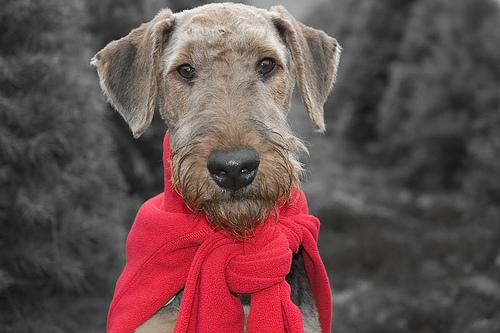
Airedale Terrier
'King of terriers' — biggest of the bunch, hypoallergenic and hilariously mischievous.
Traits at a glance
Cost calculator
Training tips for a Airedale Terrier
Practical, breed-specific advice tuned to a Airedale Terrier's temperament, energy and trainability.
House-Training Consistency
Establish a strict toileting schedule and supervise closely indoors; immediately interrupt accidents with a firm verbal marker and quickly move your Airedale outside to finish, then calmly praise when they toilet in the correct spot.
Early Socialisation Priority
Expose your Airedale to diverse people, dogs, and environments before 16 weeks, redirecting any overly bold or rough behaviour with a quick leash check and immediately rewarding calm, appropriate greetings to prevent terrier bossiness developing.
Exercise Plus Brain Work
Provide at least one hour of vigorous daily exercise combined with scent work, puzzle toys, or training sessions to tire both body and mind—a bored Airedale becomes destructive and stubborn fast.
Managing Terrier Tenacity
Watch for selective hearing and opportunistic mischief; when your Airedale ignores known commands, use a well-timed leash correction or removal of freedom, then immediately release pressure and praise the moment they comply to teach responsiveness matters.
Firm But Fun Approach
Match their clever, spirited nature with clear boundaries and consistent consequences for pushiness, while keeping training sessions upbeat and varied—Airedales respect handlers who are fair leaders, not pushovers or tyrants.
Training guides for a Airedale Terrier
Expert-written guides picked for a Airedale Terrier's temperament and needs.
How dogs actually learn: the four quadrants explained
Positive reinforcement, negative reinforcement, and everything in between — a clear, honest look at operant conditioning and when each tool is the right call.
Building a rock-solid recall
A reliable come-when-called can save your dog's life. Here's how to build one that holds up around real distractions.
Loose-lead walking: stop the pulling for good
Why your dog pulls, and a step-by-step plan using clear reinforcement to build a relaxed, no-tension walk.
Health & nutrition for a Airedale Terrier
What to watch for, how to feed, and how to keep a Airedale Terrier in top shape — tuned to this breed's size and build.
Common health concerns
- •Airedale Terriers are genetically prone to hip dysplasia, so monitor for lameness, difficulty rising, or reluctance to jump, especially as they mature.
- •This breed can develop hypothyroidism, which may present as unexplained weight gain, lethargy, or coat quality deterioration requiring veterinary assessment.
- •Watch for signs of gastric dilatation-volvulus (bloat) such as restlessness, distended abdomen, or unproductive retching, particularly after large meals or vigorous exercise.
- •Airedales may be susceptible to certain skin allergies and hot spots, often triggered by environmental or food sensitivities that can be mitigated through species-appropriate nutrition.
Feeding & nutrition
- •Feed your Airedale a biologically-appropriate raw diet consisting of 80% raw muscle meat (beef, lamb, kangaroo), 10% raw meaty bones (chicken necks, lamb ribs), and 10% organ meat (liver, kidney) to support their large, active frame and reduce allergy risks.
- •Aim for approximately 2-3% of their ideal body weight daily in raw food (roughly 800g-1300g for a 40-65lb Airedale), split into two meals to reduce bloat risk and maintain energy through the day.
- •Raw feeding supports dental health, coat quality, and digestive function in this breed while minimizing processed ingredients that may trigger skin sensitivities common in Airedales.
- •If convenience absolutely requires commercial food, choose a high-quality, grain-free kibble as a secondary option, but understand it cannot replicate the nutritional benefits and digestive ease of fresh raw food.
Exercise & weight
- •Airedale Terriers require at least 60-90 minutes of vigorous daily exercise including brisk walks, off-leash running, or interactive games to match their high energy levels and prevent destructive boredom.
- •Incorporate mentally stimulating activities like scent work, agility training, or puzzle games to engage their clever terrier minds and prevent mischievous behaviour.
- •Provide varied terrain and activities (swimming, hiking, fetch) to build muscle tone and support joint health without repetitive strain that could aggravate hip dysplasia tendencies.
- •Avoid intense exercise immediately before or after meals to reduce bloat risk, and ensure regular activity to prevent obesity which places additional stress on hips and joints.
Educational guidance only — not veterinary advice. Always consult a licensed vet for your dog's specific health needs.
Ready to meet a Airedale Terrier?
Search animal shelters and rescues across Australia — and consider bringing a certified trainer to your first meet-and-greet.